Fabricated evidence
An officer who invents evidence, falsifies a report or swears to something that did not happen, and passes it to a prosecutor, violates the right to a fair trial. In the Second Circuit the claim can succeed even where probable cause existed for the arrest.
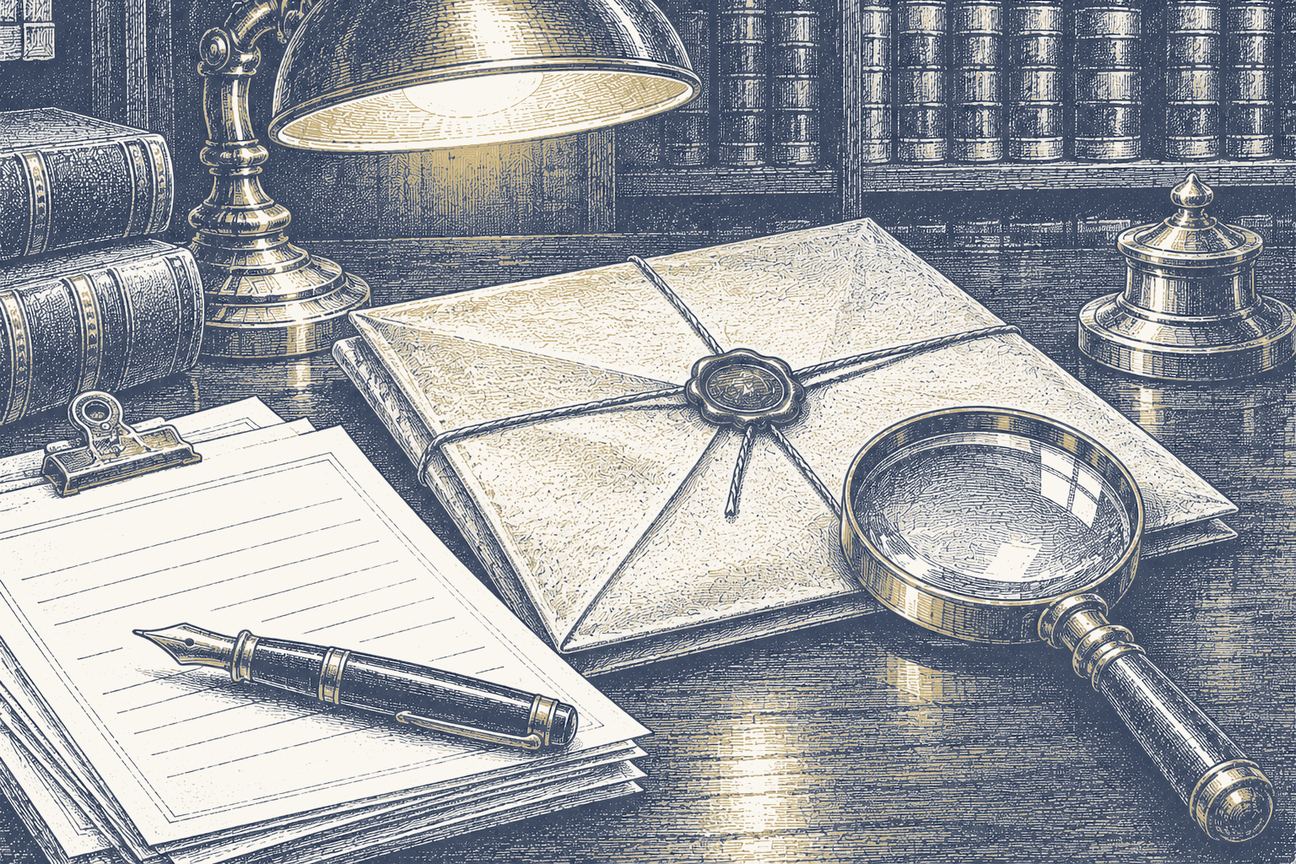
Fabrication cases are document cases. The claim is proved by setting the officer's reports, sworn statements and testimony against the recordings, the physical evidence and the witnesses, and showing where the account was invented.
The right not to be deprived of liberty on fabricated evidence
The Second Circuit has recognized a constitutional right not to be deprived of liberty on the basis of evidence fabricated by an officer acting in an investigative capacity (Zahrey v. Coffey, 2000). The claim is usually called a denial of the right to a fair trial, and it rests on due process: the government may not use evidence it knows to be false to take a person's liberty.
The elements, as the Second Circuit applies them, are:
An investigating official
A police officer, detective or other official acting in an investigative role, including a prosecutor acting as an investigator.
Fabricated information
False evidence: an invented statement, an altered report, a false account of what the officer saw.
Likely to influence a jury
Information material to the decision of a factfinder.
Forwarded to prosecutors
The officer passed the information on, in a report, a complaint, testimony or conversation.
A deprivation of liberty
The plaintiff suffered a loss of liberty as a result, such as detention, conditions of release or repeated court appearances.
Probable cause is not a defense
The feature that sets this claim apart is that it does not depend on the absence of probable cause. In Garnett v. Undercover Officer C0039 (2016), the Second Circuit held that a fair-trial claim for fabricated evidence lies even where probable cause existed, and affirmed a jury's award of nominal damages and punitive damages against the officer. An officer who had reason to arrest still has no license to embellish the report.
This matters in practice because many arrests are supported by some legitimate basis, and a false arrest claim fails for that reason alone. If the officer then added a false detail to make the case stronger, a fabrication claim may remain.
Accrual: McDonough v. Smith
In McDonough v. Smith (2019) the Supreme Court held that a fabricated-evidence claim accrues on favorable termination of the criminal case, not when the fabrication is discovered. A defendant who sees the false report during discovery, or hears the false testimony at a hearing, is not required to file a civil suit while the prosecution continues.
The federal period then runs from the favorable termination: 3 years in New York, 2 years in New Jersey and Pennsylvania, and 4 years in Florida. State-law claims against public employers carry much shorter notice periods, and the deadlines page sets them out. If there was a conviction, the claim waits until it is reversed, vacated or otherwise invalidated, as Heck v. Humphrey requires.
Coerced and fabricated confessions
Confessions are where fabrication and coercion meet. Three rules govern:
- Miranda alone is not enough. In Vega v. Tekoh (2022) the Supreme Court held, 6 to 3, that a Miranda violation is not itself a constitutional violation actionable under Section 1983. The remedy for a missing warning is suppression in the criminal case.
- Use in a criminal case. There is no Fifth Amendment self-incrimination violation unless the statement is used in a criminal case (Chavez v. Martinez). A coerced statement used to charge or try the person can support a claim.
- Coercion as due process. Coercive questioning may be actionable as a substantive due process violation even where the statement is never used, if the conduct is severe enough.
A confession the officer wrote and the suspect never gave, or details fed to the suspect and then attributed to him, is fabricated evidence and is analyzed under Zahrey and Garnett. Several public wrongful conviction settlements in Philadelphia involved allegations of a coerced confession or coerced witnesses.
Suppressed evidence and the prosecutor's office
Fabrication claims often travel with claims that favorable evidence was withheld. Suppressing material favorable evidence violates due process regardless of good faith (Brady v. Maryland). An officer who hides evidence from the prosecutor can be liable for the resulting unfair trial.
Prosecutors themselves have absolute immunity for advocacy, even for knowing use of false testimony, but only qualified immunity for investigative work such as fabricating evidence before probable cause. The City of New York can be liable under Monell for a District Attorney's office policies on disclosure and summation misconduct (Bellamy v. City of New York, 2d Cir. 2019). The malicious prosecution page covers prosecutorial immunity in more detail.
Wrongful conviction compensation statutes
Where fabricated evidence led to a conviction that was later vacated, state compensation statutes can provide a second route:
| State | Statute | Key terms |
|---|---|---|
| New York | Court of Claims Act § 8-b | Proof by clear and convincing evidence of conviction and imprisonment, a qualifying pardon, reversal or dismissal, innocence, and that the claimant did not cause the conviction; no cap; filed within 2 years |
| New Jersey | N.J.S.A. 52:4C-5 | A statutory formula based on the claimant's pre-incarceration income or the years of incarceration |
| Florida | Fla. Stat. § 961.06 | A per-year amount, prorated, with a cap of $2,000,000, plus tuition and reimbursement of fines and costs; the 2025 amendment removed the "clean hands" bar and lengthened the filing window to 2 years |
| Pennsylvania | None found | No compensation statute as of our last check |
These statutory claims do not require proof that anyone acted wrongfully, but they do require proof of innocence. The Section 1983 claim requires the reverse. The two are evaluated together.
How we prove fabrication
- Every version of the officer's account: memo book entries, arrest and complaint reports, the sworn complaint, grand jury and hearing testimony.
- Body-worn camera, surveillance and bystander video, which most often exposes the false detail.
- Laboratory, property and chain-of-custody records for physical evidence.
- Interrogation recordings and the timeline of the questioning.
- The officer's disciplinary history, which in New York became available by FOIL after the 2020 repeal of Civil Rights Law 50-a.
If a criminal case is pending
We coordinate with defense counsel first. The claim does not accrue until the case ends in the accused's favor, and evidence of fabrication belongs in the defense before it belongs in a civil complaint.
Common questions
If there was probable cause, can I still sue for fabricated evidence?
In the Second Circuit, yes. In Garnett v. Undercover Officer C0039 (2016) the court held that a fair-trial claim for fabricated evidence lies even where probable cause existed, and it affirmed a jury's award of nominal and punitive damages against the officer. Fabrication is a separate wrong from an arrest without probable cause.
When does the time to sue start?
Under McDonough v. Smith (2019), a fabricated-evidence claim accrues when the criminal case ends in the accused's favor, not when the fabrication is discovered. A person who learns of the fabrication during the criminal case does not need to sue while that case is pending.
The police never read me my rights. Is that a Section 1983 claim?
Not by itself. In Vega v. Tekoh (2022) the Supreme Court held that a Miranda violation is not a constitutional violation actionable under Section 1983. A confession that was actually coerced, or fabricated, is a different matter and may support a claim.
Can the prosecutor be sued for fabricating evidence?
A prosecutor has absolute immunity for advocacy, but only qualified immunity for investigative acts, such as fabricating evidence before probable cause exists. Most fabrication claims are brought against the officers who created the evidence.
Discuss the matter with counsel.
A confidential conversation with an attorney. We identify the constitutional claims the facts support, the right defendants, the defenses that will be raised, and the first deadline that applies. If the matter belongs with another firm, we say so.
(718) 484-7510If a criminal charge is open, we coordinate with defense counsel before any statement is taken. English, Russian and Spanish in-house. Contingency fee, confirmed in a written retainer.